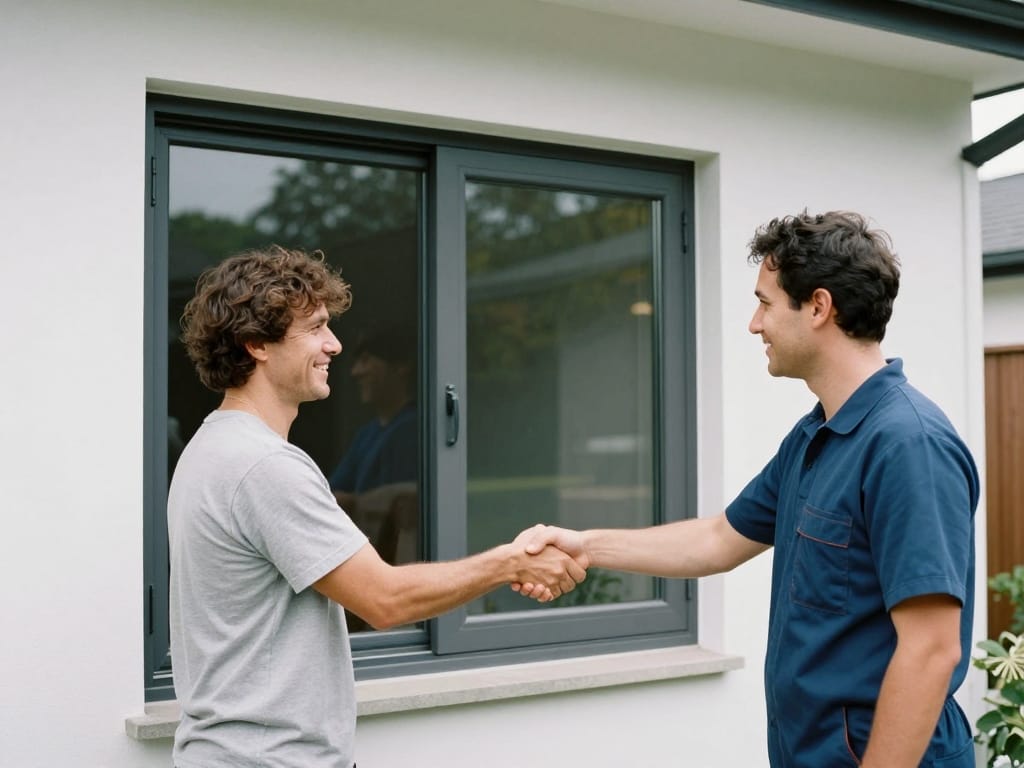
Security glazing does more than stop bullets. It's also about HR's duty of care, especially during active shooter events, forced entry, or severe weather. Consider it for ground-floor windows or easy entry points. High-traffic spots or places with known security risks also need it.
How does it work? Security glazing uses laminated glass. A practical overview of installing new windows aligned with international standards such as CE and ISO.. This glass has multiple layers bonded with a tough interlayer, often polycarbonate. Even when broken, this interlayer keeps the glass together, blocking easy access. Proper installation matters. Anchor the glazing to the frame; otherwise, a strong kick could break it.
Common errors? Thinking security film is enough. Films can slow smash-and-grab attempts, but they don't stop serious threats. Neglecting the frame is another mistake. A weak frame ruins strong glazing. Also, consider the specific threat. Ballistic glazing differs from forced-entry glazing.
What happens if you get it wrong? You might waste money or create a false sense of security, leaving employees open to attack. Failed glazing gives intruders easy access and raises the risk of injury from broken glass. You could also face legal issues. Get a security expert's opinion before you decide.
A wall is a structure and a surface that defines a location; brings a load; provides safety, shelter, or soundproofing; or offers a decorative objective. There are numerous types of wall surfaces, including border obstacles in between nations, brick wall surfaces, defensive walls in fortifications, and retaining wall surfaces that hold back dirt, stone, water, or sound. Wall surfaces can additionally be discovered in structures, where they support roofings, floors, and ceilings, confine areas, and provide sanctuary and safety and security. The construction of wall surfaces can be categorized into mounted walls and mass-walls. Mounted wall surfaces transfer the load to the foundation with articles, columns, or studs and commonly include structural aspects, insulation, and coating aspects. Mass-walls are constructed from strong products such as masonry, concrete, adobe, or rammed earth. Wall surfaces may likewise house utilities like electric wiring or pipes and should conform to local building and fire codes. Wall surfaces have traditionally offered defensive purposes, with the term "wall" initially describing defensive wall surfaces and barricades. Instances of well-known defensive walls consist of the Great Wall of China and Hadrian's Wall surface. Along with their useful functions, walls can likewise be decorative, contributing to the aesthetic appeal of a room.
.Thermal insulation is the reduction of heat transfer (i. e., the transfer of thermal energy in between items of differing temperature level) in between things in thermal contact or in series of radiative influence. Thermal insulation can be attained with specially engineered methods or procedures, as well as with ideal things shapes and materials. Warm flow is an unavoidable effect of call between objects of various temperature. Thermal insulation supplies a region of insulation in which thermal conduction is minimized, producing a thermal break or thermal barrier, or radiant heat is reflected instead of soaked up by the lower-temperature body. The protecting capacity of a material is measured as the inverse of thermal conductivity (k). Reduced thermal conductivity amounts high shielding ability (resistance worth). In thermal engineering, various other vital properties of insulating products are product density (ρ& rho;-RRB- and particular warmth capability (c).
.